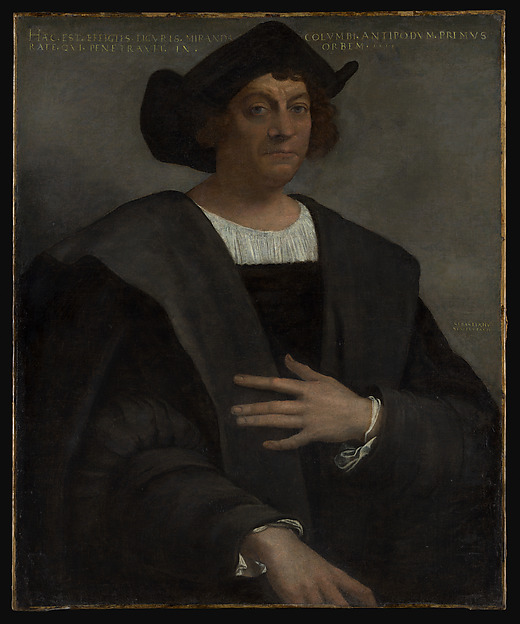
High Renaissance
High Renaissance spans roughly 1495–1527.
The High Renaissance ran from about 1495 to 1527, conventionally bounded by Leonardo’s Last Supper and the Sack of Rome. Concentrated in Florence and Rome, it represents the brief high point of Renaissance ideals: idealized naturalism, harmonious composition, and a sense of effortless mastery over form and space.
Why it looks the way it does
By this point artists had fully absorbed perspective, anatomy, and classical proportion, and used that mastery to build unified, balanced compositions rather than showcase technique piece by piece. Leonardo’s sfumato blended tones into soft, smokeless transitions instead of hard outlines; Raphael favored calm, pyramidal groupings of figures; Michelangelo brought sculptural, monumental weight to painted bodies. Papal and princely patronage in Rome funded work at a scale and ambition that matched these aims.
How to tell it apart
Compared to the Early Renaissance, the High Renaissance feels more atmospheric and unified, with figures and space fused rather than assembled from separately drawn parts. Compared to Mannerism, which follows it, the High Renaissance prizes natural balance and restraint; Mannerist painters deliberately exaggerate and distort those same ideals — elongating figures and twisting poses — once High Renaissance perfection seemed impossible to surpass on its own terms.
Key names
Leonardo da Vinci, Michelangelo, and Raphael define the movement, each working in Florence and Rome during these three decades.
Updated: 2026-07-10