Impressionism
Impressionism spans roughly 1860–1890.
Impressionism ran from about 1860 to 1890, centered in France. You can identify it by visible, broken brushstrokes; a light, high-key palette with little use of black; and subjects drawn from modern, everyday life — cafés, gardens, boating parties, city streets — rather than the historical or mythological scenes favored by earlier academic painting.
Why it looks the way it does
Impressionist painters often worked outdoors (en plein air) and quickly, trying to record a fleeting moment of light before it changed. That urgency shows in the paint itself: strokes stay separate and visible instead of being blended smooth, and color describes light and atmosphere more than precise form. Edges are often soft, and compositions can feel like a candid, cropped snapshot — a habit influenced by early photography and by Japanese woodblock prints then circulating in Europe.
How to tell it apart
Compared to the darker, polished Realism that preceded it, Impressionism is brighter and looser. Compared to Post-Impressionism, which follows it, Impressionism stays more focused on the momentary optical appearance of a scene, while Post-Impressionist painters pushed further toward structure, symbolism, or personal expression.
Key names
Claude Monet, Pierre-Auguste Renoir, Edgar Degas, Camille Pissarro, and Berthe Morisot are the movement’s central figures. The name comes from Monet’s 1872 painting Impression, Sunrise, used dismissively by a critic and then adopted by the painters themselves.
Updated: 2026-07-09
Artworks from this movement
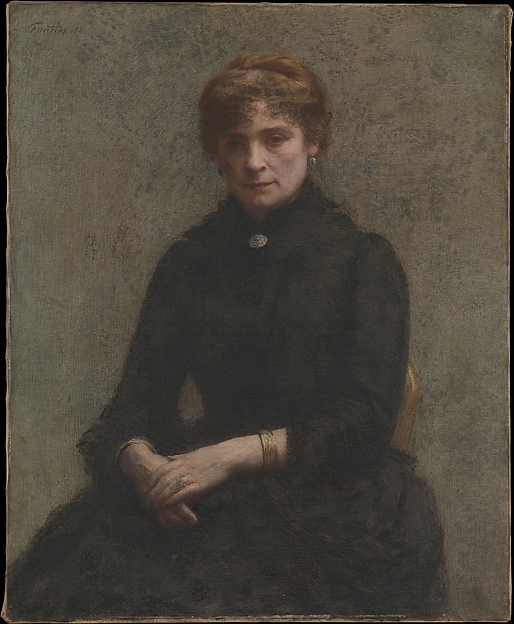 Portrait of a Woman (1885)
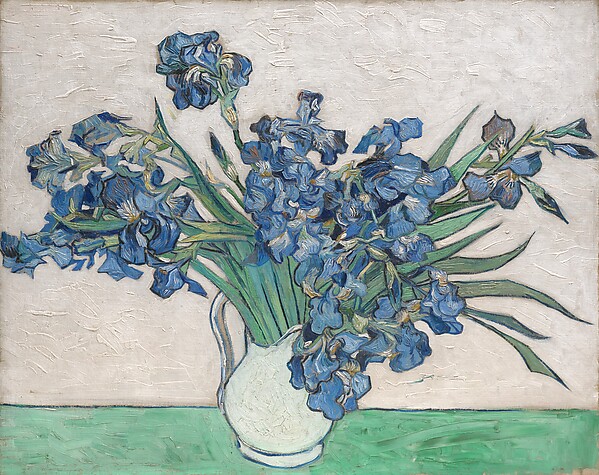 Irises (1890)
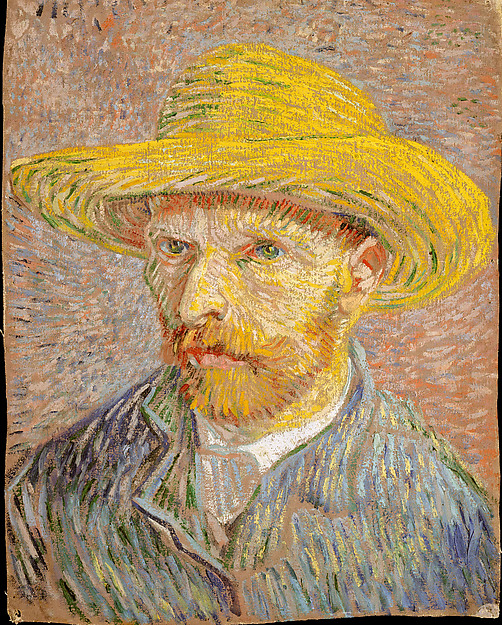 Self-Portrait with a Straw Hat (obverse: The Potato Peeler) (1887)
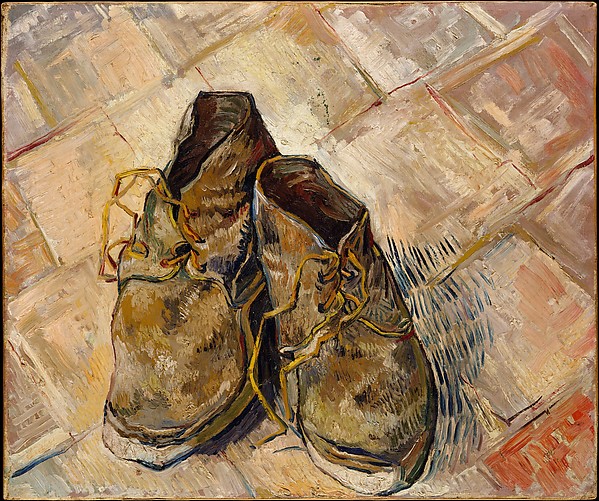 Shoes (1888)
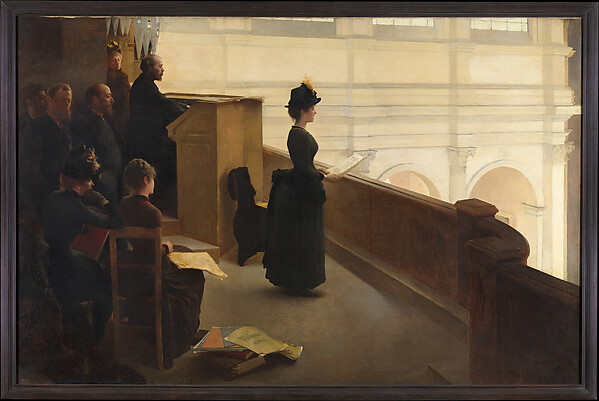 The Organ Rehearsal (1885)
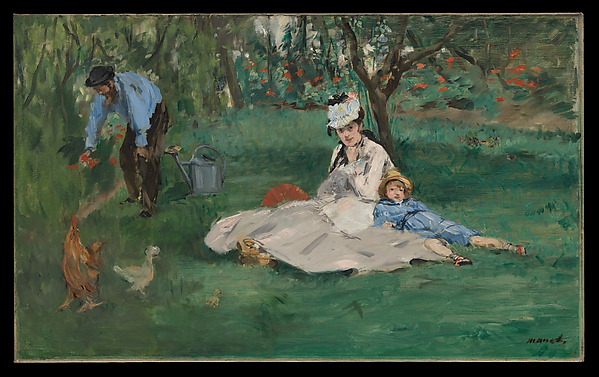 The Monet Family in Their Garden at Argenteuil (1874)
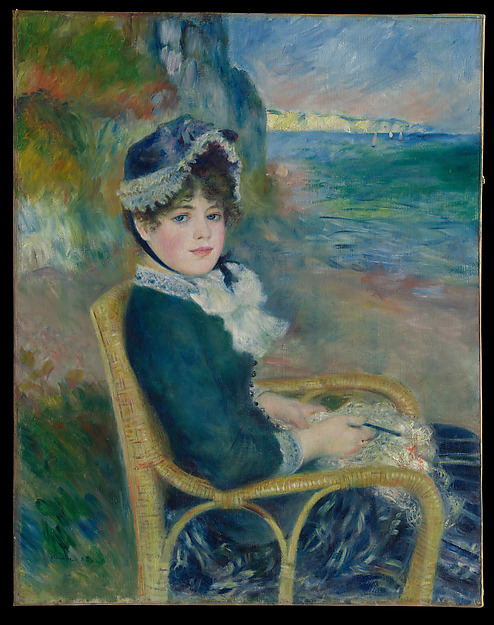 By the Seashore (1883)
 Study for "A Sunday on La Grande Jatte" (1884)
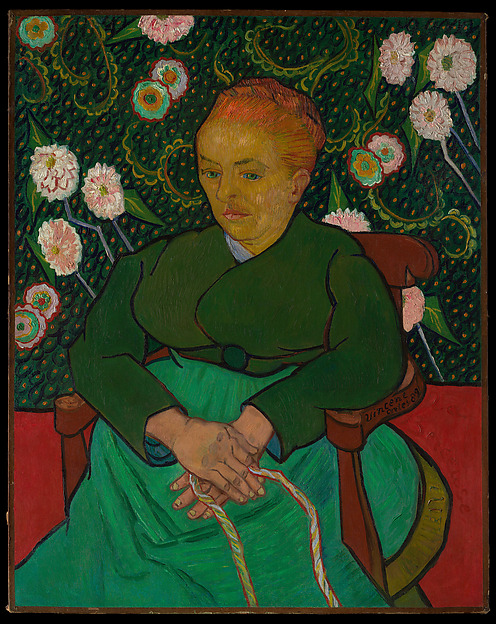 La Berceuse (Woman Rocking a Cradle; Augustine-Alix Pellicot Roulin, 1851–1930) (1889)
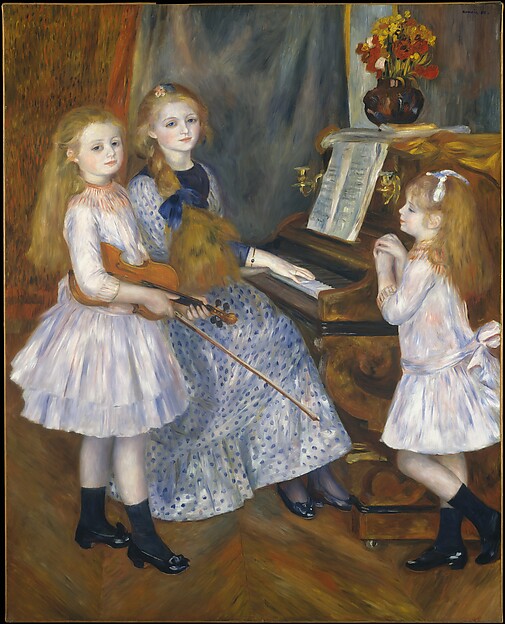 The Daughters of Catulle Mendès, Huguette (1871–1964), Claudine (1876–1937), and Helyonne (1879–1955) (1888)