Romanticism
Romanticism spans roughly 1800–1860.
Romanticism ran from about 1800 to 1860, taking hold across Europe as a reaction against the rational order and classical restraint of Neoclassicism. It prioritizes intense emotion, imagination, and the sublime power of nature, favoring dramatic subjects and loose, expressive brushwork over cool, controlled line.
Why it looks the way it does
Romantic painters distrusted Enlightenment rationalism and academic rules, turning instead toward subjective feeling, dramatic natural forces (storms, shipwrecks, vast mountain landscapes), exotic or distant settings, and national history and folklore. Brushwork loosens and color intensifies to convey mood and movement directly, and compositions often place a small human figure against overwhelming nature or historical violence to evoke awe or terror — what critics of the time called the sublime.
How to tell it apart
Compared to Neoclassicism, Romanticism trades idealized classical form and cool reason for emotional intensity, movement, and painterly texture. Compared to Realism, which follows it, Romanticism still leans on dramatic, idealized, or exotic subject matter; Realism rejects that idealization entirely in favor of plain, unembellished depictions of everyday and working-class life.
Key names
Eugène Delacroix, Francisco Goya, J.M.W. Turner, Caspar David Friedrich, and Théodore Géricault represent the movement’s major national strands.
Updated: 2026-07-10
Artworks from this movement
 Hagar in the Wilderness (1835)
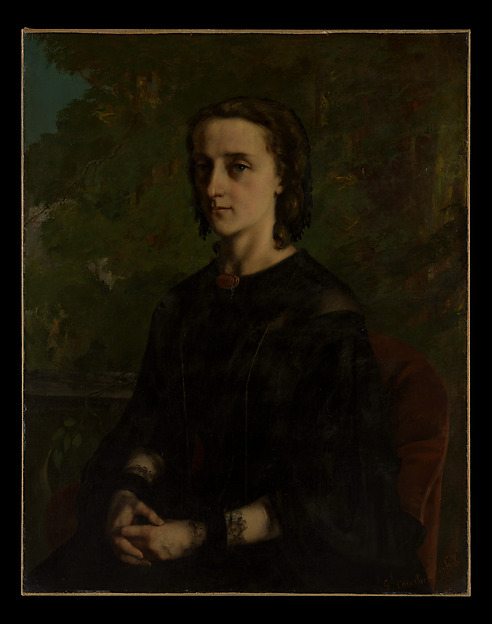 Madame Frederic Breyer (Fanny Hélène Van Bruyssel, 1830–1894) (1858)
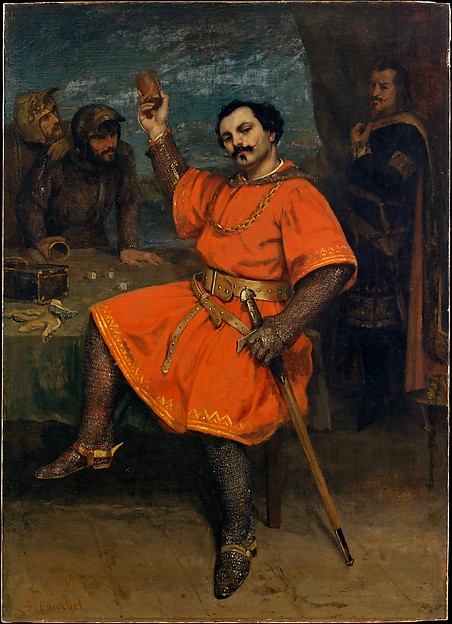 Louis Gueymard (1822–1880) as Robert le Diable (1857)
 The Spanish Singer (1860)
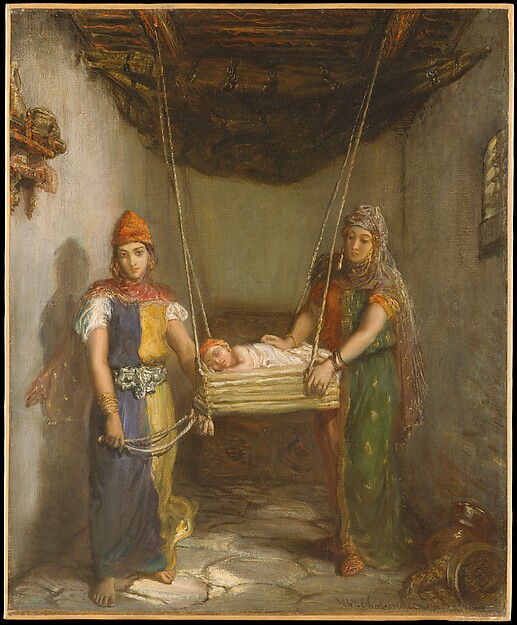 Scene in the Jewish Quarter of Constantine (1851)
 Study of a Female Nude (1840)
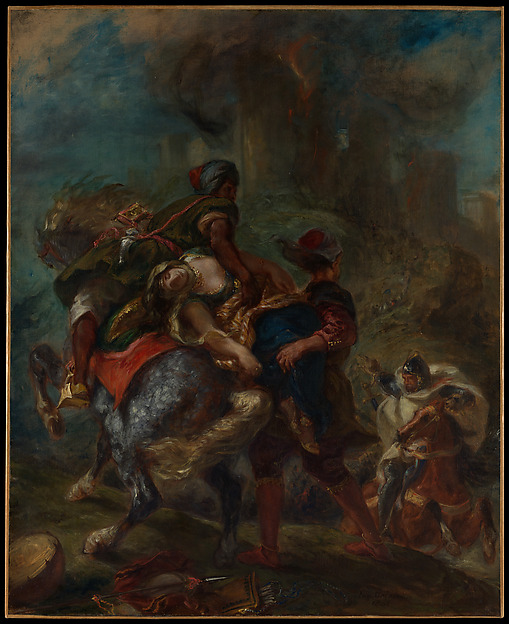 The Abduction of Rebecca (1846)
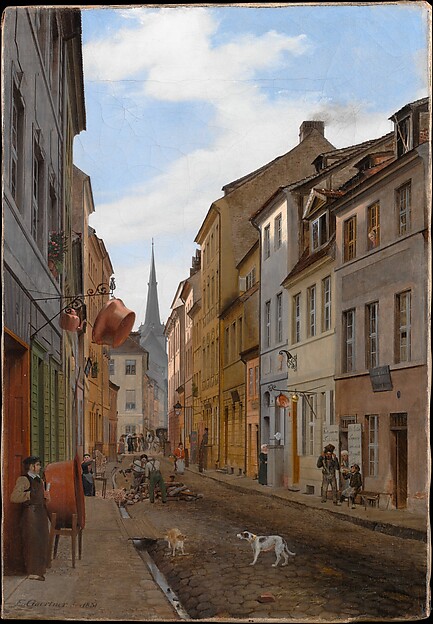 Parochialstrasse in Berlin (1831)
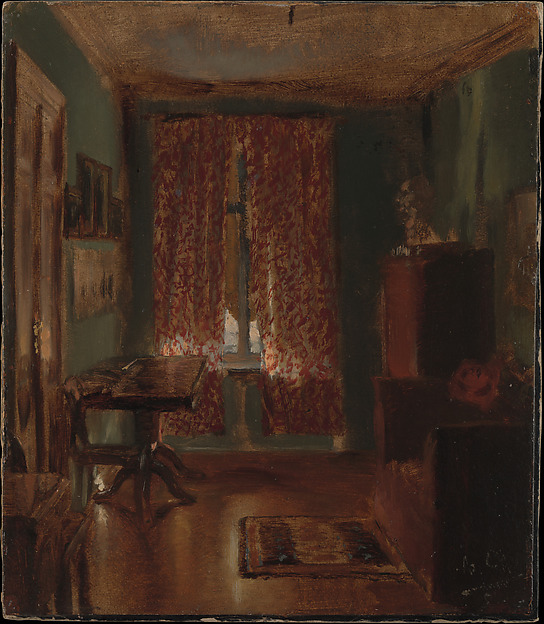 The Artist's Sitting Room in Ritterstrasse (1851)